Owners and buyerswant the same thing.The truth.
VeroMA originates thesis-driven proprietary M&A transactions. The first call carries a specific reason why one particular combination would matter, worked out beforehand. If the reason is not good enough to be worth your time, the call does not get made. Everything after that runs on what is actually true about both businesses.
Origination
The thesis comes first.
A specific company, a specific counterparty (a buyer, an operator, a sponsor, sometimes a market the business isn't in yet), and an argument for why the two belong together that survives contact with the numbers.
The argument gets built before the call, not during it. So the first conversation has something meaningful in it: here is who, here is the arithmetic, here is why it works. An owner can say yes to a second conversation in a minute. That is the point of doing the work first.
Getting there means finding the two or three factors that are mutually meaningful to an owner and a buyer. In any sector that is the whole job, and it is the same job every time.
Run for a buyer, it is the same discipline pointed the other way. A defined mandate, then the specific companies that answer it, approached one at a time.
Both sides
For an owner, the truth protects their price. For a buyer, it protects their time and their money.
Most deals that fall apart fall apart late. In month five a number comes apart in diligence. The buyer lowers their offer or walks away. The owner has already told their key people and let other conversations go cold, so they have very little room to refuse. The buyer has already spent four months and a diligence bill they cannot recover.
The cause is almost always the same. The first conversation was built to persuade instead of to describe, and everything after it was built on that.
VeroMA works the other way around. The thesis is tested before the call is made. The owner is told what their business will look like to a buyer, including the parts that lower their price. The buyer is told the problems before the introduction rather than after paying to find them. Diligence then confirms what was already disclosed.
That is what the truth is worth here. The owner keeps their leverage, because nothing surfaces that they have not already accounted for. The buyer keeps their time, because they are confirming rather than discovering. A fit that survives that is worth introducing. One that does not was never a fit.
Record
The call that started it carried a thesis.
2017
A reason to talk
A privately held, fifty-year-old electrical and solar contractor in Vermont, running quietly with no process underway. The call arrived with a worked-out thesis: a profitable regional EPC contractor belonged in the public markets, where the growth capital was. That was enough for a conversation. The conversation took two years to become a transaction.
2019
Nasdaq
The company completed a reverse merger with Jensyn Acquisition Corp. and began trading on Nasdaq in June 2019. It was among the earliest SPAC transactions in the solar sector, and the fifth publicly traded company headquartered in Vermont. VeroMA, LLC is a named party to the resulting Schedule 13D.
2021
Acquisitions
As Chief Strategy Officer, Michael directed the acquisition program that added a clean-mobility technology business and two regional solar operators, drove the rebrand to iSun, Inc., and extended operations across thirteen states. Transactions of roughly $36M and $42M, with approximately $23M in follow-on capital.
Everything above is on public record with the SEC.
Range
The sector changes. The work does not.
Michael's work has crossed gene therapy and rare disease, clinical-stage biotech, rapid diagnostics, structured finance for early-stage healthcare, a European architectural-systems manufacturer entering the U.S. market, commercialization diligence across more than two hundred early-stage ventures, and forensic engineering before that. The energy record is the deepest single example, but the pattern is the same in every sector: find the economics that govern the business, then build a case that aligns the owner and buyer.
Mandate
- Where this works
- Owner-operated companies in fragmented industries, businesses whose economics are misread by generalist buyers, and companies whose owners have no intention of running a process. The industry matters less than whether the thesis is real.
- Size
- Companies with EBITDA between roughly $1M and $25M. Searcher and independent-sponsor territory at one end, sponsor and strategic territory at the other, with private equity active across the range.
- Sector experience
- Deepest in solar and distributed energy. Also industrials and advanced manufacturing, and life sciences and diagnostics, with technology commercialization across all of them.
- Geography
- North America, with long-standing European relationships, particularly in Italy.
- Structure
- Control transactions, recapitalizations, and public-market listings. Sell-side and buy-side.
- Continuity
- Where an owner cares what happens to the name, the employees, or the town after closing, that is treated as a term of the transaction rather than a sentiment to be managed around.
- Engagement
- Retained per mandate, on contract, preferring to act as a principal rather than an advisor. The first principle is always to add value.
- Scope
- VeroMA works one mandate at a time, on transactions Michael can personally carry from thesis to close.
- What this isn't
- Not a listing service, not a broker, not a fund. VeroMA does not hold a book of companies for sale.
Principal
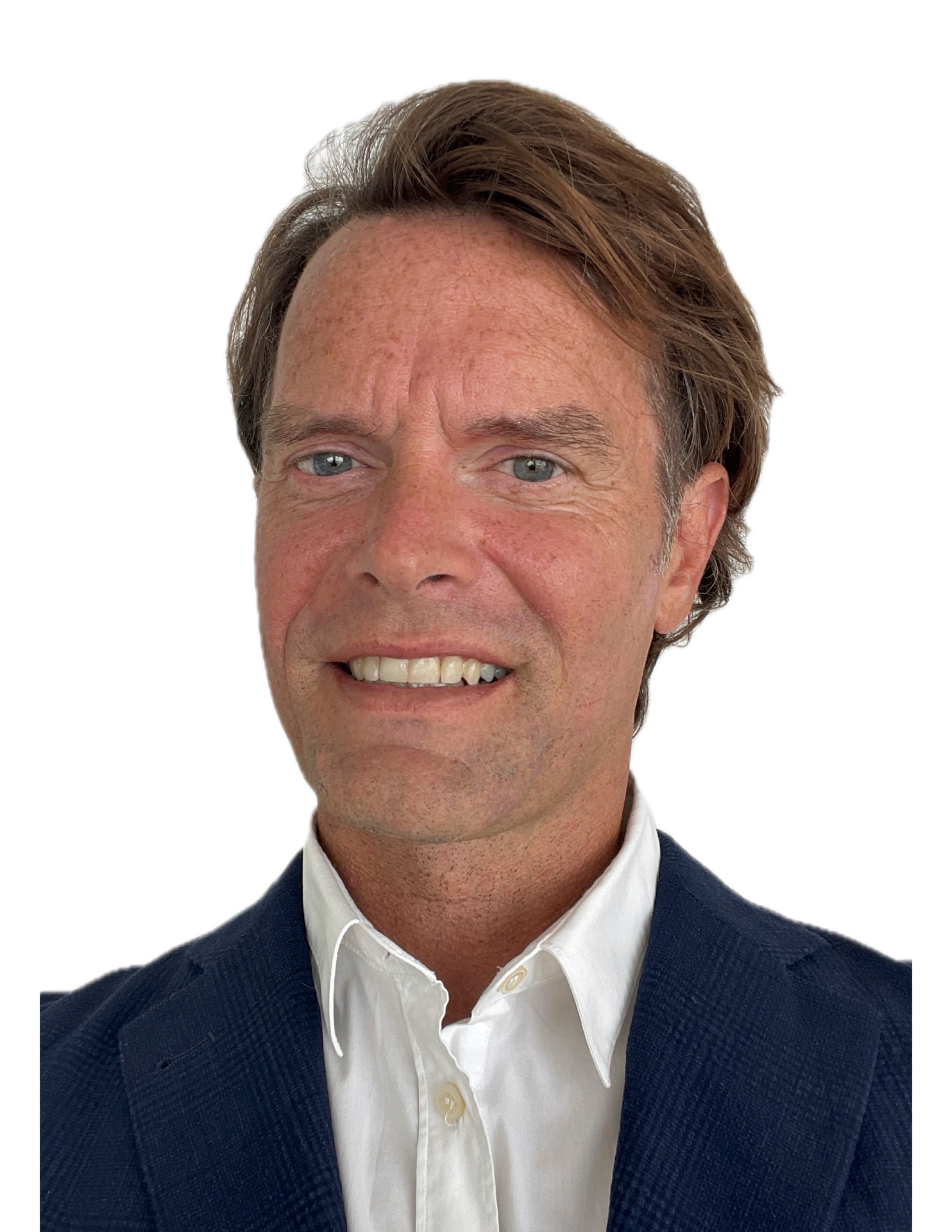
Michael has spent twenty-five years arriving in industries he did not start in. He trained as a mechanical engineer at Rochester and spent his early career commercializing technology out of university labs and early-stage companies, including gene therapy, clinical-stage biotech and rapid diagnostics, then built the North American business for an Italian architectural-systems manufacturer. Energy came later, and it is where the pattern paid off most visibly.
In 2017 he called the owner of a private Vermont solar contractor with a thesis about the public markets. Two years later the company was listed on Nasdaq. Over the following five years, as Chief Strategy Officer, he directed its acquisition program and multistate expansion.
He is currently retained as head of capital markets for a residential solar origination platform, and runs VeroMA from Miami.
The name is from Verona, Italy, where his wife's family lives and where one of his sons was born. Vero means true.
LinkedIn linkedin.com/in/michaelpdamato
Contact
Start a conversation
Let's talk about what we could put together.
VeroMA creates value through the connections no one had made before.